

Step 1: Draw a tiny half-circle for the head, inclding the eyes.

Step 2: Now we will draw the body in three segmented pieces of various lengths.

Step 3: Draw a long tail at the end of the body, using several lines to segment it off into sections as well.

Step 4: Now add six thin legs sticking out from the underside of the front of the body.

Step 5: Draw two large wings sticking out of the top of the body.

Step 6: Finish drawing the dragonfly by adding veining/lines to the wings.
Interesting Facts about the Green Darner
It is North America’s most common dragonfly – and it is also the most widespread dragonfly species. The name “Green Darner” is derived from the long abdomen which resembles the shape of a darning needle. Their breeding strategy is different than other dragonflies – whereas they fly swarms to the south in autumn, where they mate and lay eggs during the winter months. It is a predator with excellent vision – which helps when foraging and attacks
Did you know?
- Diet consist of butterflies, insects, and even other dragonflies
- Adult males often fly through long sections of water in search for a mate
- Breeding takes place in Stillwater habitats
- Their habitats include ponds, marshes, streams, ponds, and swamps
- They are listed as “Least Concerned” on the Endangered Species list
Lesson Plan Idea – Compare this Green Darner to the larger of the Green Darner species. Could it be evolution as it why there are two different sizes? Possibly create a model to work off of.
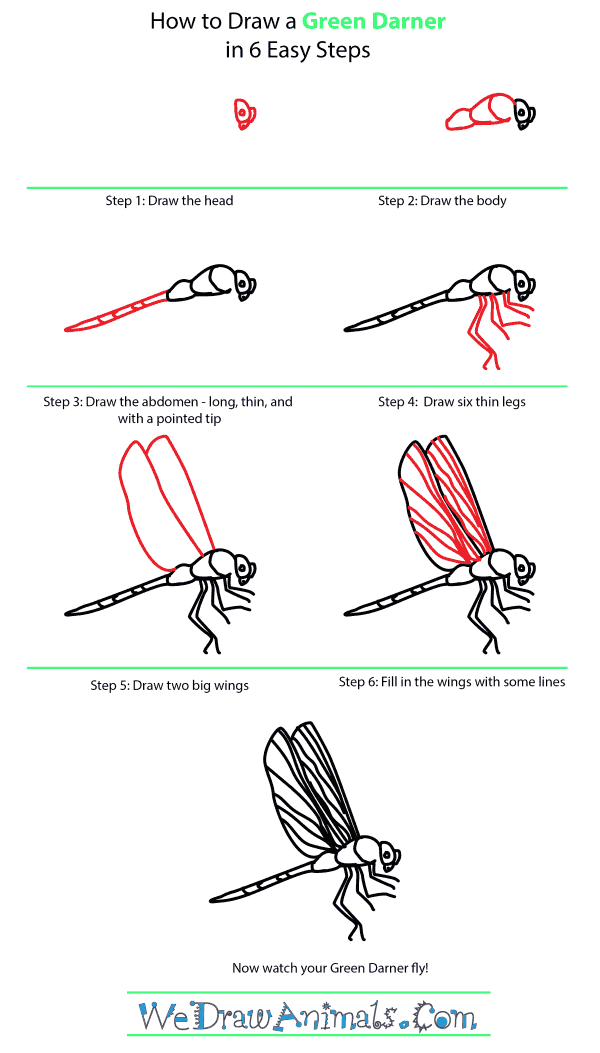
How to Draw a Green Darner – Step-by-Step Tutorial