

Step 1: Draw a curved head that extends into a small V-shape at the bottom. Add the eyes and beak.

Step 2: Draw the body, using a large curve to indicate a wide belly.

Step 3: Now it's time to add the wing to the side of the body. Draw this vaguely triangular shape, and add many feathers for detail.

Step 4: Draw a long tail sticking out from the back of the rosefinch.

Step 5: Add two skinny little legs that end with clawed feet.

Step 6: For a finishing touch, add a small branch for the bird's claws to be clinging to.
Interesting Facts about the Rosefinch
The Rosefinch has a short conical bill – with males have brighter plumage than the females. They moult ever September through November, where the male attains a duller set of feathering which becomes brighter throughout the winter. In the winter they can be found in Northern Iran, Afghanistan, Tibet, China, and Japan. Habitats include thickets, oakwoods, and forests near gardens and rivers.
Did you know?
- It is the most common Rosefinch in Europe and Asia
- They were found breeding in England once (it is uncommon)
- Nests are placed low to the ground in bushes
- Eggs are blue with dark brown spots
- Typical nests will contain five eggs
Lesson Plan Idea – There is a sister to the Redstart – the Scarlet Redstart – and there has been research presented (and accepted) that they (the Redstart) should be moved to a new Monotypic Genus. Have children research to see why this needs to be. Why couldn’t they have stayed classified as they are?
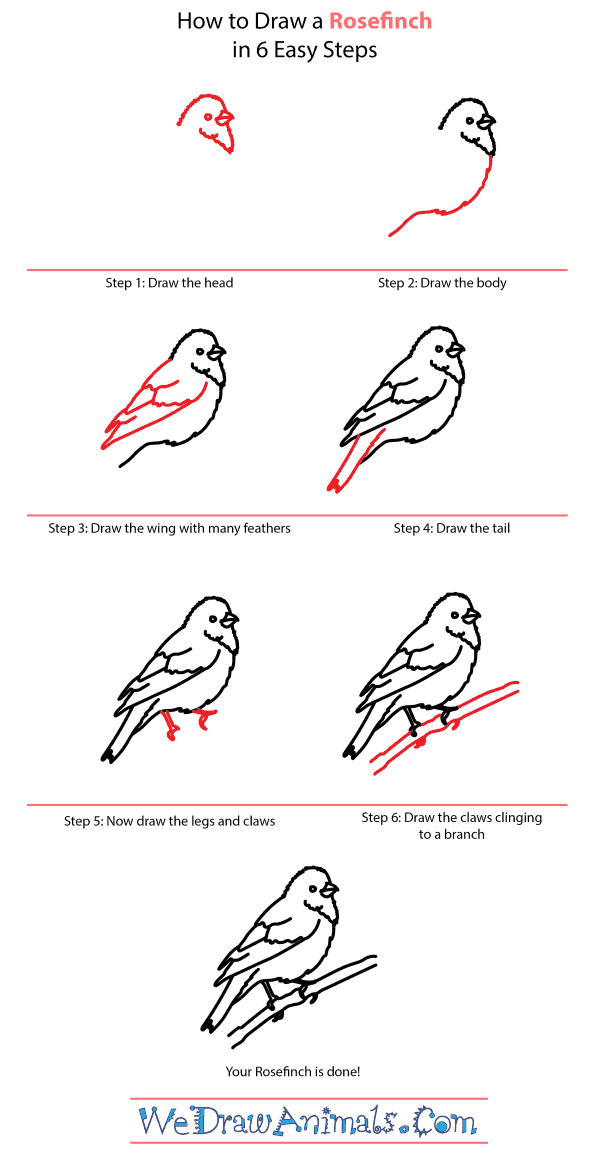
How to Draw a Rosefinch – Step-by-Step Tutorial