

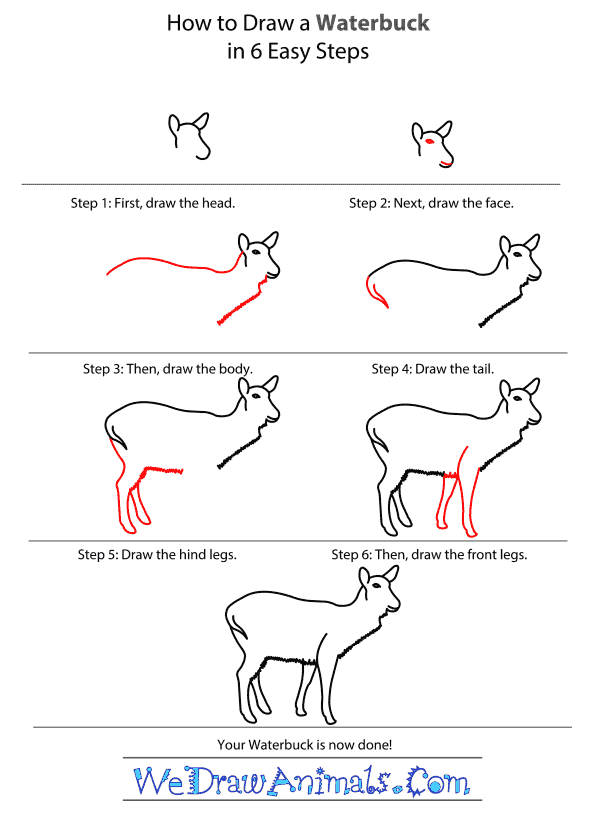
Step 1: First, draw the head of your waterbuck. It is mostly potato shaped, with two leaf-shaped ears.

Step 2: Next, add the face. Draw an eye and mouth.

Step 3: Now draw the body. These are large antelopes so make his body shape large. Draw the line under the neck with a small zigzag shaped line to show fur.

Step 4: Give your waterbuck a short, pointed tail.

Step 5: Let's draw the hind legs. They are on the slim side, as these antelope don't travel very far. They stay near a water source, which is how they get their name. Make the front of the leg and the belly in the same zigzag type line from before.

Step 6: Draw the front legs. They are almost straight lines, with a little more zigzag under the belly. Your waterbuck is done! If you would like to color your picture, the waterbuck has a shaggy reddish brown coat.
Interesting Facts about the Waterbuck
Waterbuck (Kobus ellipsiprymnus) are a large antelopes found all across Africa. Waterbuck are especially dependent on water and become dehydrated easily, so they are mostly found around rivers, lakes and valleys.
Did you know?
- Waterbuck form herds consisting of six to thirty others.
- They are grazers, meaning they eat grass and other vegetation. Waterbuck spend a lot of time around water for access to food as well as to escape predators.
- Waterbuck have long bodies and short necks, and they also have a mane of hair on their necks.
- Male waterbuck have two horns that grow backwards from their head and then curve forwards. The age of the waterbuck determines the length of their horns.
- They are very sedentary, which means they have to rest a lot. The less water is available, the more time waterbuck spend resting.
- The main predators of waterbuck are lions, hyenas, and leopards.
- Waterbuck are incredibly common and hunted for sport in Africa.
- Female waterbuck mature at three years of age, while males mature at six years.
Lesson plan note: Discuss how a waterbuck’s horns and choice of habitat (near water) helps it to protect itself from the kinds of predators that tend to hunt it.
How to Draw a Waterbuck – Step-by-Step Tutorial